


Dr. Cecília Ruiz: When Technique Meets Vision
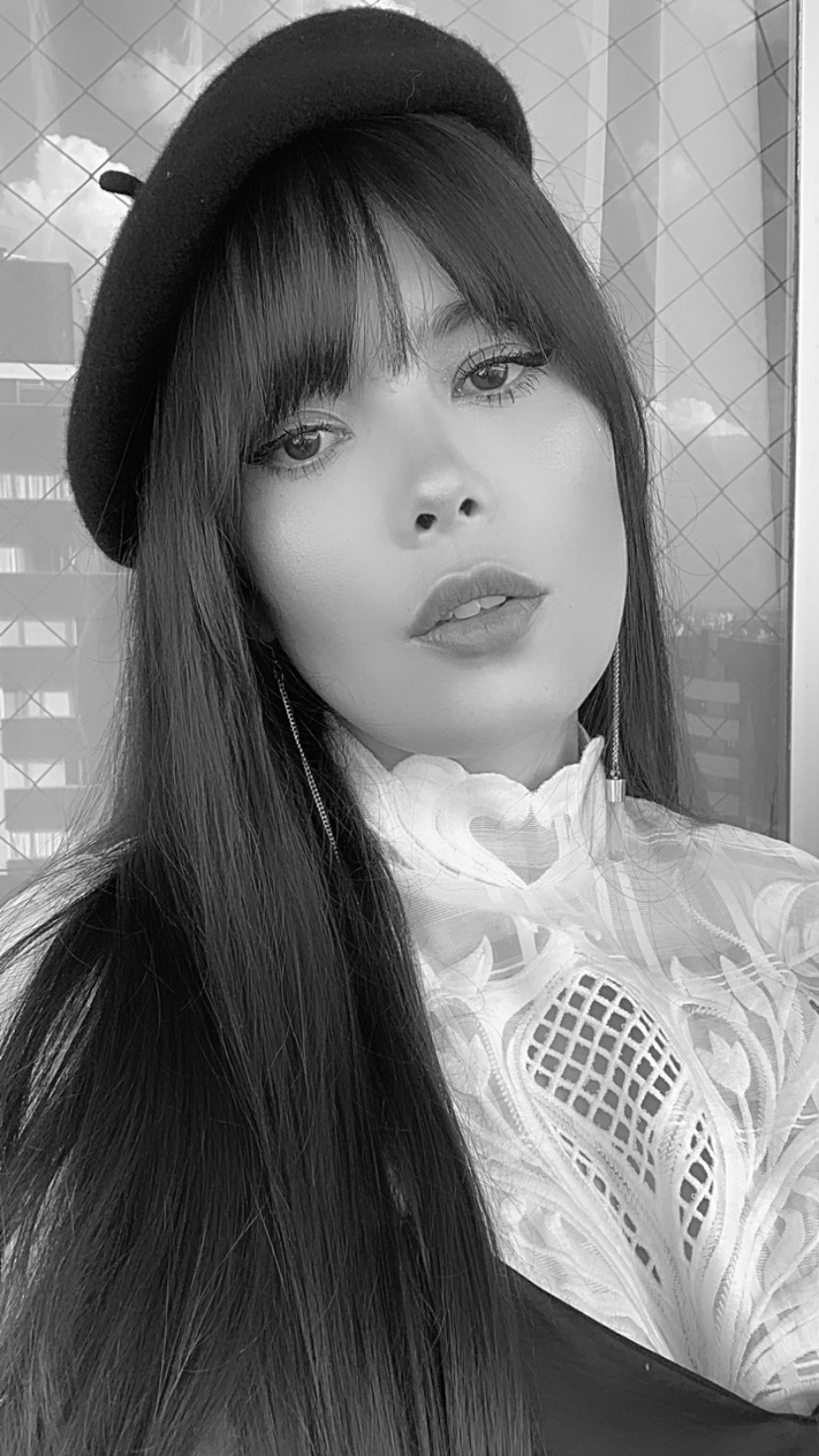
HEALTH COVER EDITION - SEPTEMBER 2026 ISSUE

A surgeon’s excellence is built not only on the number of techniques they master, but also on the quality of the choices they learn to make over time. In the case of Dr. Cecília Ruiz, this perspective has been shaped through different fields of medicine, reconstructive experiences, and a continuous journey of professional development.

A graduate of the Souza Marques Technical-Scientific Faculty of Medicine in Rio de Janeiro, Cecília completed her residency in General Surgery at UFRJ before pursuing Plastic Surgery at INCA. She later gained experience in breast and head and neck reconstruction, along with further training at USP and A.C. Camargo Cancer Center, as well as advanced training in various plastic surgery techniques.
It is an extensive educational journey, but what stands out is not simply the number of stages along the way. It is how each experience helped shape an increasingly attentive perspective on the body and on the responsibility involved in intervening in it.

Today, breast surgery holds a central place in her practice. Mastopexy, reduction mammoplasty, hybrid mammoplasty, reduced-scar techniques, and rapid-recovery strategies are all part of a broad repertoire developed to address different anatomies and individual needs, without turning any single technique into an automatic solution.
Perhaps this is one of the most compelling aspects of her work. Knowing many possibilities does not mean wanting to use them all. On the contrary: experience also means recognizing when one technique is appropriate, when another may offer a better outcome, and when doing less may be the more thoughtful decision.
Plastic surgery is going through a period of significant evolution. Technologies, surgical techniques, and recovery strategies are continuously expanding the possibilities within the field. At the same time, social media has transformed the way many women perceive their own bodies and approach the consultation room, bringing references and expectations, and sometimes exposing them to standards that can be difficult to sustain beyond the screen.

It is within this context that a surgeon’s work carries an even greater responsibility. It is not enough to know how to operate. It is essential to understand who is sitting across from you, what she wants, what can realistically be offered, and which choices truly make sense for that individual.
This is the perspective we explored in our conversation with Dr. Cecília Ruiz: a career built on depth and dedication, her extensive experience in breast surgery, the evolution of the specialty, and everything that years of practice have taught her about beauty, choice, and care.

1. When did you realize that plastic surgery was the field in which you wanted to build your career?
Plastic surgery won me over precisely because it brings together two dimensions of medicine that have always fascinated me: technical precision and the ability to reconstruct.
My training in General Surgery was fundamental in building a solid foundation as a surgeon. Later, my experiences in plastic surgery, breast reconstruction, and head and neck reconstruction greatly expanded my understanding of what it means to operate on someone. When you take part in a reconstruction, you realize that you are not treating merely an anatomical structure.
There is a person, a story, and often a process of reclaiming one’s own identity behind that procedure.
I believe it was through this journey that I understood plastic surgery was the field in which I wanted to build my professional life.
Every stage of my training added something to the way I see my work.
Today, when I enter an operating room, I carry with me not only the techniques I have learned, but also the awareness that every decision has an impact on how that patient will see herself afterward.
For me, surgery has never been simply about changing a part of the body. It is about bringing together science, technique, proportion, and sensitivity to achieve a result that makes sense for that individual.
2. What has your experience taught you about anatomy, proportion, and individuality in breast surgery?
The more breasts you operate on, the more you realize that no two are the same, and that completely changes the way you plan a surgery.
There are differences in anatomy, skin quality, the amount and distribution of breast tissue, breast position, the shape of the chest, asymmetries, and, above all, what each woman considers beautiful and wants to preserve about herself.
That is why I increasingly believe less in applying a standardized technique. The technique needs to serve the patient, not the other way around.
Over the years, I have developed a very attentive eye for proportion and naturalness. I do not seek to create a “perfect breast” according to a predetermined standard. I seek to understand what result is harmonious for that particular body, taking into consideration anatomy, safety, personal wishes, and also how that result will evolve over time.
Perhaps one of the greatest developments in a surgeon’s career is precisely this: early in your career, you are very focused on mastering techniques. With experience, you understand that true sophistication lies in knowing which technique to choose, how much to do, and, often, when to do less.

3. In a landscape where plastic surgery is advancing rapidly, while social media increasingly influences perceptions of beauty, how do you decide what truly deserves to be incorporated into your practice?
Plastic surgery has evolved tremendously. Today, we have technologies, new surgical concepts, recovery strategies, and resources that allow us to provide increasingly individualized treatments.
I enjoy innovation, and I believe a surgeon needs to keep up with this evolution. But, to me, innovation needs to be accompanied by discernment.
Not everything that is new necessarily represents progress. Before incorporating a technique or technology into my practice, I seek to understand its safety, indications, scientific evidence, and, above all, whether it truly adds any benefit to the patient’s outcome.
At the same time, we are facing a very particular issue of our time: many patients come to the consultation with references shaped by social media. These are edited images, filters, specific angles, and bodies that are repeatedly presented until they create the impression that there is a single desirable standard of beauty.
A very important part of the consultation is precisely to deconstruct this idea.
I like to listen to what the patient wants, but I also try to help her understand her own anatomy and what is both possible and beautiful for her body.
In my view, the best surgery is not the one that makes a woman look like someone else. It is the one in which the result feels as though it belongs to her.
4. At what point does changing something cease to be a choice about one’s own body and become an attempt to meet other people’s expectations? And what is the surgeon’s responsibility when they realize that this boundary has been crossed?
This is perhaps one of the greatest responsibilities of a plastic surgeon.
There is an important difference between a woman who has a consistent concern, has lived with it for some time, and wants a change for herself, and someone who is trying to achieve an external standard or believes that surgery will be able to resolve issues that go beyond the body.
And that difference becomes especially clear when we know how to listen.
That is why I consider the consultation just as important as the surgery itself. This is the moment when I try to understand not only what the patient wants to change, but why it matters to her and what she hopes to feel afterward.
There are situations in which the best medical decision is not to operate. And saying “no” is also a form of care.
A surgeon cannot simply be someone capable of technically executing a desire. There is a medical responsibility to assess limits, expectations, risks, and motivations.
Plastic surgery can have a profoundly positive impact on self-esteem and self-confidence, but it should not be presented as a solution to every insecurity. Our role is also to recognize that boundary.

5. After so many years of training, practice, and continuous development, what has changed in your understanding of beauty? And, looking toward the future of plastic surgery, what do you believe no technology will ever be able to replace?
My perception of beauty has become much less rigid over the years.
The more people you meet and the more bodies you operate on, the more you realize that beauty is not about perfection or the absence of asymmetries. It is much more connected to harmony, proportion, and the way a person recognizes herself in her own body.
Today, I value individuality much more.
Technology will certainly continue to transform plastic surgery. We will have more precise resources, increasingly personalized procedures, and, most likely, better and better recovery experiences. I find that extraordinary.
But there is something no technology can replace: the medical eye.
The ability to listen to a patient, understand what she may not necessarily be able to put into words, recognize her limits, interpret her anatomy, and make responsible decisions will always remain human.
Ultimately, surgery takes place at the heart of a relationship built on trust. The patient entrusts the surgeon with something deeply intimate: her body and an expectation of transformation. That trust requires technical knowledge, but also ethics, sensitivity, and responsibility.

6. After everything medicine, surgery, and your daily interactions with so many women have taught you, is there something you still feel you need to say? If you could use your voice to speak to the world without filters, without protocols, and without having to meet anyone’s expectations, what would you want people to hear from you?
Perhaps I would say that we do not need to spend our lives trying to fit into versions of ourselves created through other people’s eyes.
We live in a time when we are constantly invited to compare ourselves. There is always a body, a career, motherhood, a life, or an apparently perfect image in front of us. And it is very easy to turn that comparison into self-imposed pressure.
Working every day with the human body and with image has taught me precisely the opposite: there is no such thing as perfection.
There are stories, proportions, scars, asymmetries, stages of life, and characteristics that make each person unique.
Plastic surgery can transform a body. I see that every day. But I believe the most beautiful transformation happens when that change does not try to create a new person, but simply allows someone to recognize herself again.
If there is something I would like women to hear from me, it is this: take care of yourselves, make choices for yourselves, and do not be afraid to desire change. But also, do not allow the world to determine what you need to change in order to be enough.
To me, beauty should never mean erasing who you are.
It should mean revealing who you are, with greater freedom and confidence.


