


MARCOS PITOMBO: THE ART OF STAYING IN MOTION

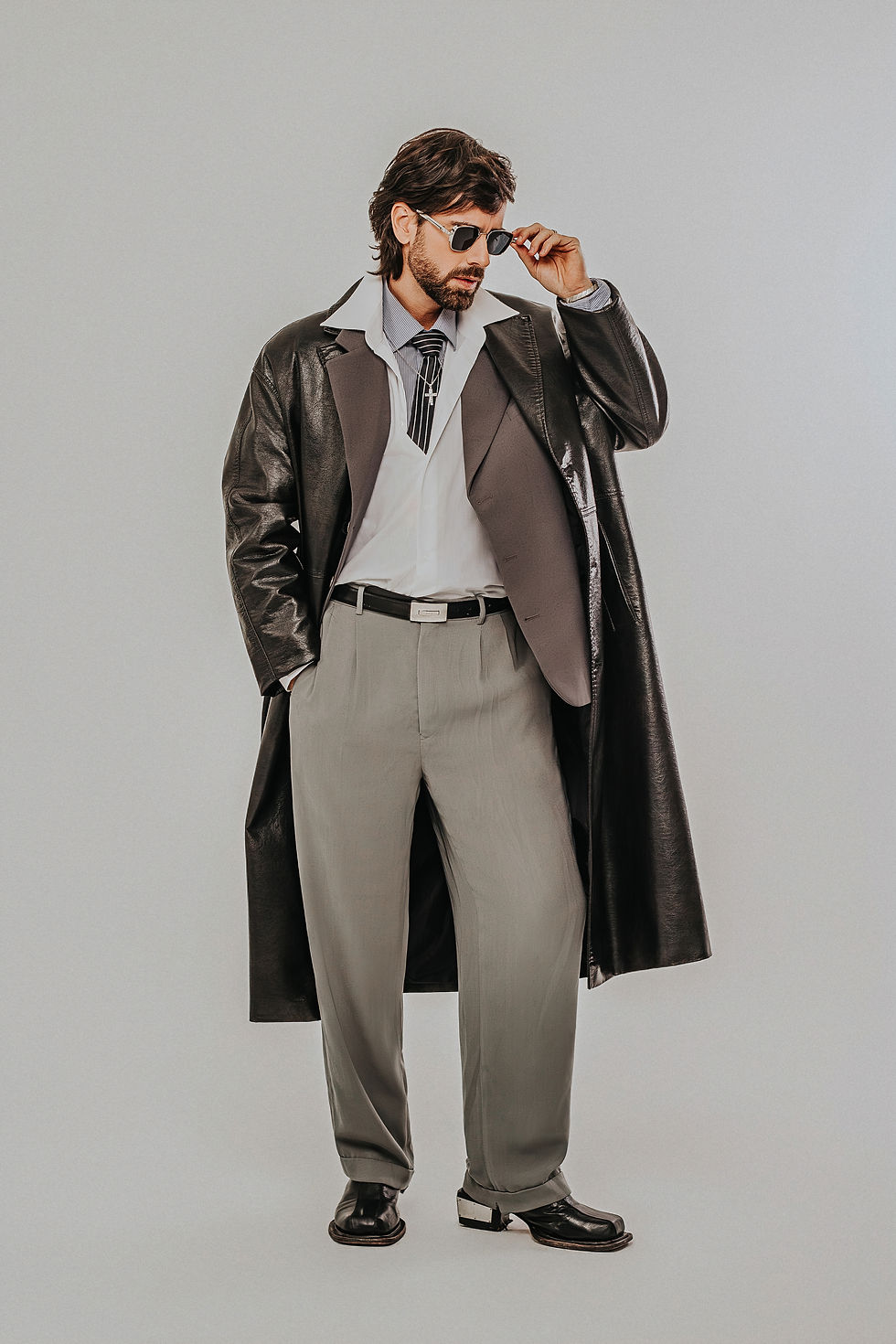
‘MAN’ EDITION COVER - JUNE 2026 ISSUE

In an industry that celebrates the new with every season, remaining relevant for more than two decades requires far more than talent. It demands reinvention, consistency, and, above all, authenticity. Marcos Pitombo has built his career on exactly these pillars. With a solid and multifaceted body of work, the actor has navigated different phases of the Brazilian audiovisual landscape without ever losing what sets him apart: the ability to transform each character into a genuinely human experience.
Over the course of more than twenty years, Pitombo has established himself as one of the most respected artists of his generation. Across television, film, streaming, and theater, he has developed a career defined by versatility, moving seamlessly between different formats, genres, and forms of expression. More than simply accumulating successful projects, he has built a trajectory guided by a constant pursuit of artistic growth and evolution.

But for Marcos, the true secret to longevity is not the experience accumulated over the years. It lies in the ability to keep learning.
“After more than twenty years in my career, I’m still discovering new things about the characters I portray, about people, and about myself,” he reveals. “Every project brings different questions, demands a different perspective, and invites me to step beyond my certainties.”

His words encapsulate a trait that has defined his entire journey: an enduring sense of curiosity. In a profession that demands observation, listening, and sensitivity, Pitombo believes that growth happens precisely when an artist allows himself to remain open to the unknown.
This willingness to explore new territories has led him to build a diverse and consistent career. On television, he won over audiences in productions such as Os Mutantes, Promessas de Amor, A História de Ester, Vidas em Jogo, Pecado Mortal, Vitória, Babilônia, Haja Coração, Orgulho e Paixão, and Salve-se Quem Puder. Distinct characters, varied narrative worlds, and one common thread: the emotional commitment that brings authenticity and depth to every story he tells.

In film, he expanded his range through productions such as Jardim dos Girassóis and Os Farofeiros 2, demonstrating his ability to move effortlessly between dramatic and comedic roles. In the streaming space, he has embraced the industry's evolution by joining projects such as Chuva Negra, further highlighting his connection to the new forms of storytelling that continue to redefine contemporary entertainment.
Despite his well-established presence on screen, it is on stage that Marcos has experienced some of the most transformative moments of his recent career.
“Theater allows me to have a broader role in the creative process,” he explains. “There is greater room to develop ideas, choose stories, and build something in a more personal and authorial way.”

This search for a more active participation in the artistic process has found fertile ground in works such as Clarice e Nelson, a play inspired by the works and reflections of Clarice Lispector and Nelson Rodrigues, and more recently Poemas, a text by Gabriel Chalita that explores universal themes such as love, memory, loss, and existence.
On stage, without cuts or second takes, the actor finds a form of connection that no other medium can fully replicate.
“There is a very powerful exchange of energy between actors and audience. Every performance is unique. Theater demands vulnerability, discipline, and absolute presence.”

This full commitment seems to reflect the current moment in his career—one marked less by the pursuit of visibility and more by the search for meaning.
When speaking about the criteria that guide his professional choices today, Pitombo shows the maturity of someone who understands that success and fulfillment do not always follow the same path.
“I look for stories that spark curiosity, that bring reflection, and characters that challenge me. I don’t think only about the scale of a project, but about the connection it establishes with me and what it can add to my artistic journey.”
It is a perspective that reveals not only an experienced artist, but someone who understands the importance of coherence in a market often driven by speed and constant exposure.
This coherence also extends beyond stages and screens. Over the years, Marcos has built a public presence aligned with values such as respect, inclusion, diversity, and animal welfare. In an era in which authenticity has become one of the most valuable currencies of contemporary life, his stance reinforces the idea that influence and responsibility go hand in hand.
“We live in a time when visibility comes with responsibility,” he reflects. “An artist’s role goes beyond the characters they portray. It also involves the spaces of dialogue they occupy and the values they choose to stand for.”
This awareness of the impact of his voice helps explain why his career remains relevant after more than two decades. His work is not limited to entertainment; it also fosters reflection, empathy, and human connection.
When asked about the legacy he wishes to build, his answer reveals the essence of everything he has constructed so far.
“I’ve never thought of legacy as something you build alone. But I hope my journey is remembered for its coherence, authenticity, and respect for the audience and for the profession I chose.”

Perhaps this is exactly what makes Marcos Pitombo such a singular figure in the Brazilian artistic scene. In an environment where longevity is often a challenge, he has turned evolution into a method, curiosity into fuel, and authenticity into a signature.
Today, more than just an actor recognized for his characters, Marcos represents a generation of artists who understand art as a continuous process of discovery. A performer who continues to expand horizons, explore new languages, and build bridges between stories and people.
Exclusive interview with Marcos Pitombo:
1. After more than 20 years of career, what still challenges and motivates you in acting on a daily basis?
I think what motivates me most is precisely the fact that acting is never exhausted. After more than twenty years in my career, I’m still discovering new things about the characters, about people, and about myself. Every project brings different questions, demands a different perspective, and invites me to step beyond my certainties.
The art of acting is very much about observation and listening. The more experiences you accumulate, the greater your emotional repertoire becomes—but also the greater your responsibility to tell stories in a truthful way. Today, I’m very interested in the idea and the possibility of understanding human worlds that are different from my own. And also of amplifying my own voice.
Perhaps this is the greatest challenge and, at the same time, the greatest privilege of the profession: staying curious. I believe the day I think I already know everything about acting will be precisely the day I stop evolving. And this constant search for discovery is what continues to move me.

2. Among television, film, streaming, and theater, which format currently interests you the most, and why?
I find it difficult to choose a specific format because, ultimately, what drives me is the same across all of them: the craft of acting. Regardless of the medium, we are always facing the same challenge, which is understanding human beings, building characters, and telling stories in a truthful way.
Each language naturally has its own particularities. Television has a unique ability to reach millions of people and create a very close relationship with the audience over time. Cinema fascinates me through its aesthetic richness, the power of the image, and the possibility of immortalizing a story. Streaming has expanded narrative possibilities, allowing for more complex characters and freer formats. Theater, on the other hand, offers something irreplaceable: the live encounter, the immediate exchange with the audience, and the sense that each performance is unique.
But despite the technical and creative differences, there is something that unites all these experiences. In all of them, the exercise remains the same: listening, observing, understanding emotions, and offering a part of yourself to bring other stories to life. Perhaps that is why I have never seen these formats as mutually exclusive choices. They all interest me because, in different ways, they feed the same passion that has accompanied me for more than twenty years: acting.
3. Theater has played an important role in your recent trajectory. What do the stage and live performance offer you that other languages cannot?
I believe theater holds a special place in this stage of my career because it allows me a broader participation in the creative process. As the years go by, it is natural for many actors to also take on a producer’s and creator’s perspective, becoming more actively involved in choosing themes, texts, and stories they want to bring to the audience. Theater offers a lot of space for this kind of more authorial construction.
In addition, there is a dimension of the stage that no other language can fully replicate: the direct encounter with the audience. In theater, everything happens in real time. There are no cuts, no editing, no second takes. There is a powerful exchange of energy, where actors and audience share the same experience in that exact moment.
It is also a language that demands complete commitment from the performer. The actor is there with their voice, body, presence, and ability to connect with the narrative from beginning to end. I have been experiencing this very intensely in my recent work. In Poemas, for example, beyond acting, I was challenged to explore other forms of expression such as singing, movement, and an even more physical relationship with the scene. It was an extremely enriching process.
Perhaps that is why theater continues to be such a fascinating space for me. It demands vulnerability, discipline, and absolute presence. It is a constant exercise in listening, surrender, and discovery. And after more than twenty years in my career, continuing to find places that challenge me artistically is something I value more and more.
4. How do you choose the projects you want to do today, at this stage of greater professional maturity?
Today, more than ever, I seek coherence in my choices. I look for stories that spark my curiosity, that bring some reflection, and above all, characters that challenge me as an actor.
Professional maturity gives us a clearer understanding of what makes sense for the moment we are living. I don’t think only about the scale of a project or its reach, but about the connection it establishes with me and what it can add to my artistic journey.
In the end, I am still driven by the same restlessness that brought me here: the desire to tell good stories and to find characters that take me to places I have not yet explored.
5. What legacy do you hope to build as an artist beyond the characters you portray?
I have never thought much about legacy as something you build alone or can fully plan. But I hope my journey is remembered for coherence, authenticity, and respect for the audience and for the profession I chose.
We live in a time when visibility comes with responsibility. I believe the role of the artist goes beyond the characters they portray. It also involves how they occupy spaces of dialogue, the values they stand for, and the way they use their voice to contribute to meaningful reflection.
I try to do this genuinely, both in the projects I take part in and in my public life. If, throughout my journey, I can inspire more empathy, respect, and sensitivity through my work and my actions, I will already feel fulfilled. In the end, I believe the stories we tell have value, but the way we choose to live and relate to the world is also part of our work.


