McQueen Returns Home: Seán McGirr Finds Euphoria in London’s Darkness

London became more than a setting for Alexander McQueen’s latest chapter. Under Seán McGirr, the city became the collection’s pulse — restless, contradictory, rebellious and unmistakably alive.

There was something almost inevitable about Alexander McQueen returning to London. While Paris has long been central to the fashion house’s international identity, the British capital remains deeply embedded in its DNA: chaotic, theatrical, uncompromising and constantly capable of transforming darkness into creative energy.
For the latest collection, Seán McGirr brought the house back to its point of origin, presenting inside the atmospheric Undercroft of Lincoln’s Inn Chapel. The historic architecture created a striking tension with the collection itself. Ancient stone, Gothic vaults and centuries of history became the backdrop for a vision that moved between the sacred and the rebellious.

That collision was at the heart of McGirr’s proposition.
The designer looked simultaneously toward religious imagery and London’s rave culture, finding a common language in their intensity. Piero della Francesca’s The Baptism of Christ, a work McGirr encountered during his early years in London, became one of the collection’s artistic references, while the raw energy of the city’s nightlife provided an entirely different form of inspiration.
The result was a McQueen collection built around contradiction.

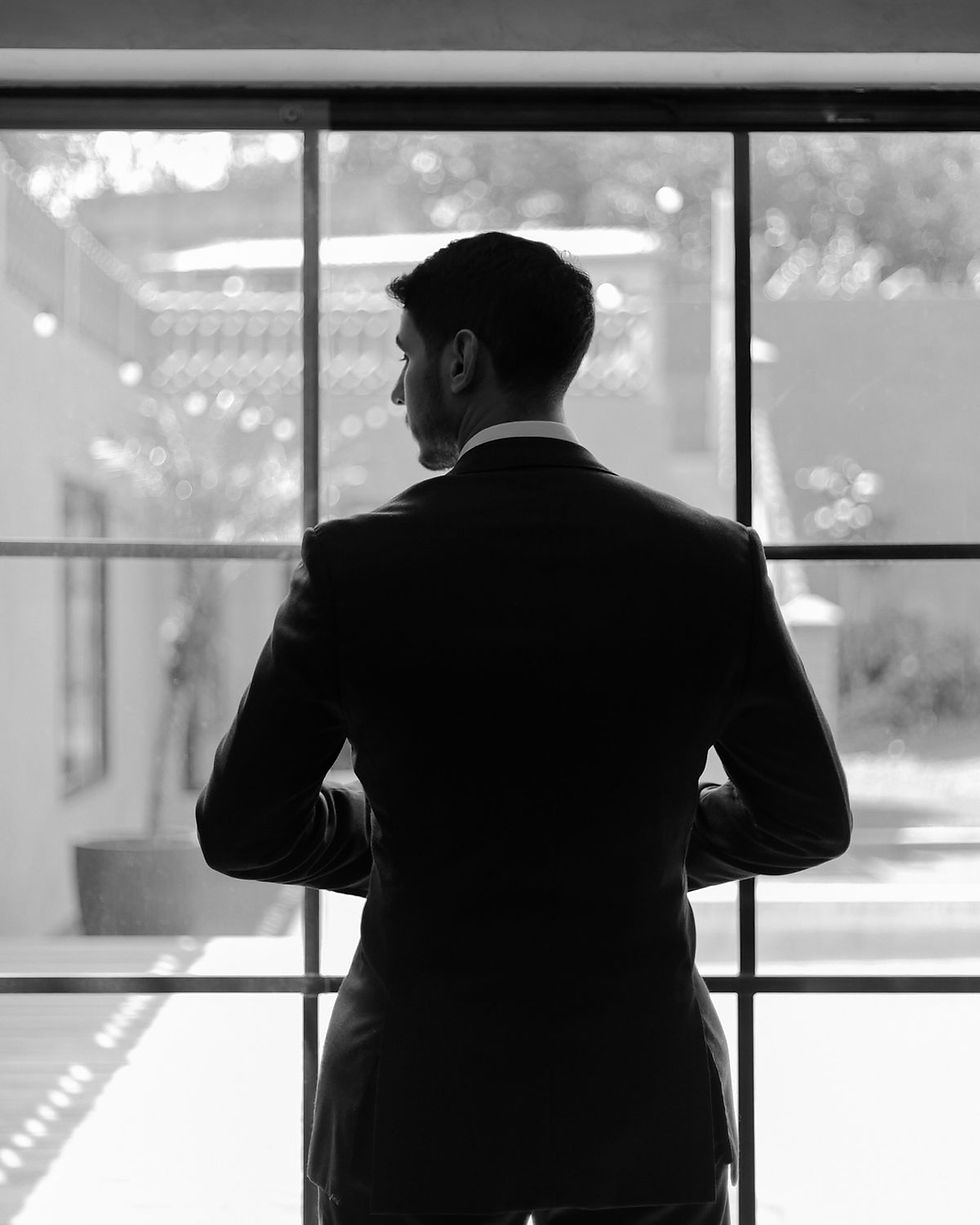
Tailoring was particularly important. Structured suits featured shoulders shaped with the suggestion of folded angel wings, introducing an almost celestial quality to sharply constructed silhouettes. The tailoring was developed with Huntsman, the historic Savile Row house closely connected to Alexander McQueen himself, and echoed the disruptive spirit of Tommy Nutter, another legendary figure in British tailoring.
But McGirr did not allow traditional tailoring to remain entirely respectable.

Leather collars, harnesses and exaggerated proportions pushed the precision of the suits toward something more rebellious. The disciplined world of Savile Row collided with the uninhibited atmosphere of a nightclub, transforming classic British tailoring into something charged with movement and attitude.
The same tension appeared in the eveningwear.
Grand gowns arrived with unexpected interruptions: harnesses created with Shaun Leane, sculptural distortions across satin, open-backed corsetry and deliberately destabilized silhouettes. Rather than treating glamour and rebellion as opposites, McGirr allowed them to coexist within the same garment.
There was also an unmistakable fascination with light.

Colors appeared as though affected by the visual afterimage of a night spent beneath stroboscopic lights. Patterns became distorted, jacquards were layered and disrupted, and surfaces appeared to approach the point of visual collapse. Metallic leaves were scattered across garments almost randomly, creating the impression that they had been caught by a sudden gust and deposited onto tailoring and dresses.
Then came the harder edge.

Mesh, perforated leather and sporty knitted pieces introduced elements of ravewear, bringing the collection closer to the streets and dance floors of London. One of its most striking moments came through a dress constructed from interconnected hand-embroidered metal skulls, each skull individually distinct, creating a powerful relationship between the human body and an object associated with mortality.
The skull, of course, carries particular weight within McQueen’s visual history. But here, darkness was not treated simply as something sinister. Instead, it became a source of energy.
That distinction feels essential to understanding McGirr’s direction for the house.

Rather than attempting to recreate Alexander McQueen’s past, the designer appears interested in understanding the emotional mechanisms that made the house so powerful in the first place: beauty against brutality, precision against chaos, elegance against rebellion.
London provided the perfect environment for that conversation.
The collection suggests a designer increasingly comfortable with contradiction — with allowing refined tailoring to exist beside rave culture, religious references beside nightlife, and beauty beside images of death.
McGirr described the philosophy simply: darkness can enter the work without being allowed to dominate life.
And perhaps that is precisely where this McQueen collection finds its greatest sense of freedom.
The darkness is there. It is visible in the skulls, the leather, the distorted silhouettes and the nocturnal references. But it is not the destination.
The destination is euphoria.

In returning McQueen to London, Seán McGirr did not simply bring the house home. He revisited the contradictions that make the city — and McQueen itself — so creatively restless.
Between the chapel and the nightclub, the angel and the demon, Savile Row and the rave floor, McGirr found a new vocabulary for a house that has always understood that the most beautiful things can emerge from the collision of opposites.