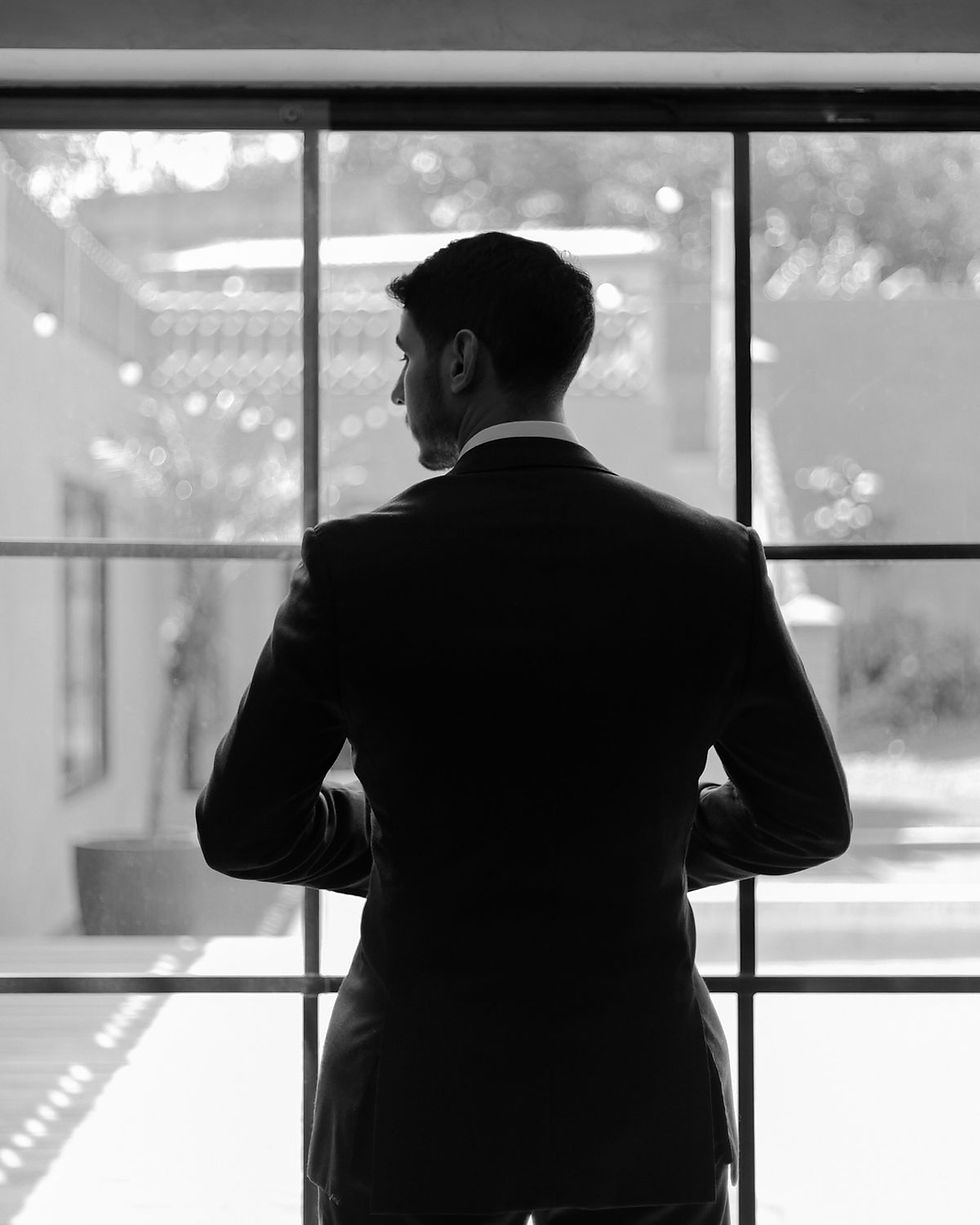
OLIVER: Between Reality and Image
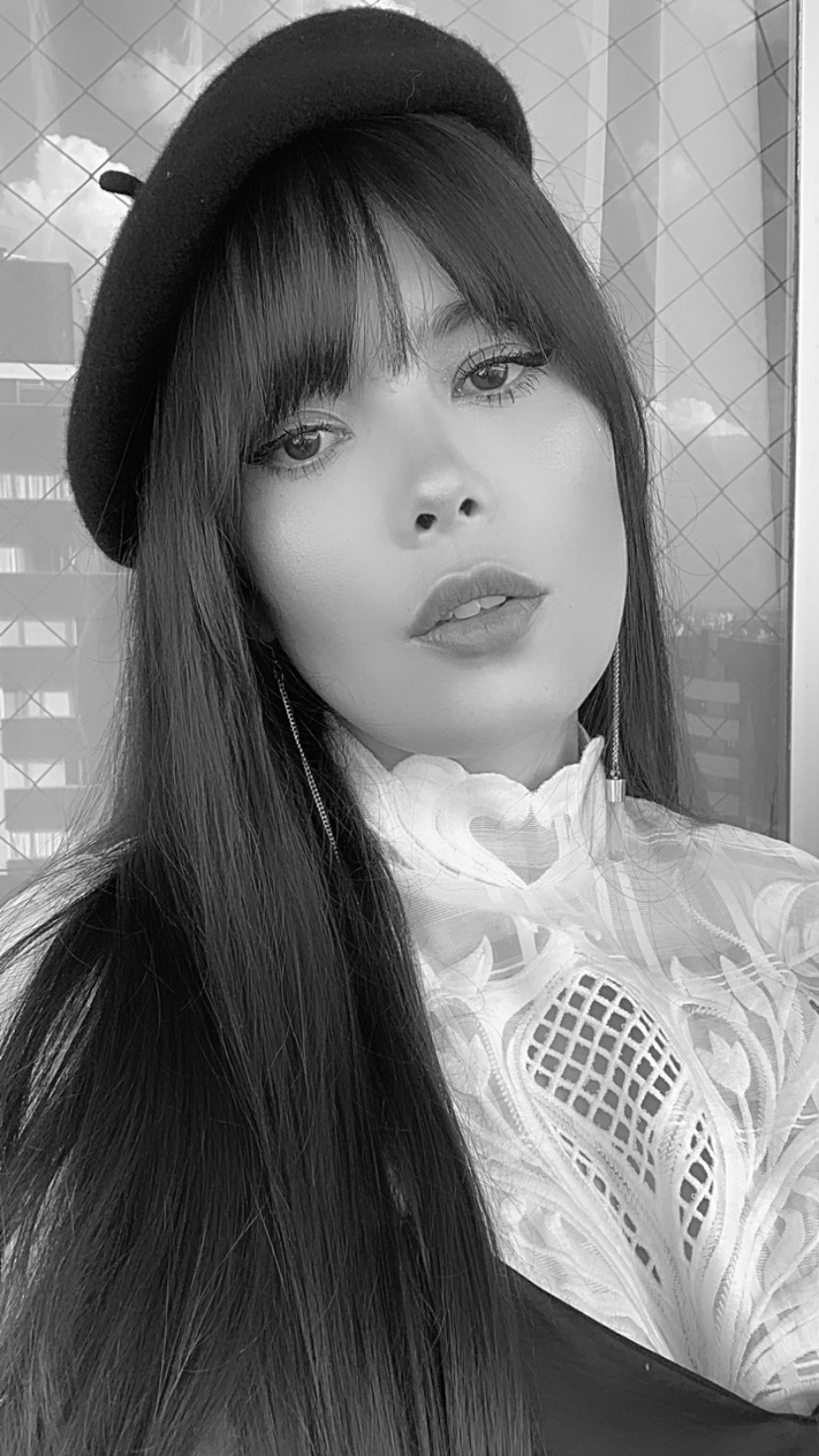
Before the camera, there were people.
Before audiovisual came fashion. Before the image, observation.

Oliver’s relationship with audiovisual storytelling did not begin when he decided to turn the camera into a profession. It began much earlier, during his years in retail, first as a salesperson and later as a store manager. It was there, through daily contact with different people, behaviors, and choices, that he developed a particular attention to what happens before an image exists.
The way someone carries themselves. What they choose to wear. A gesture. An expression. The way a space is arranged.
Details that, individually, may seem small, but together create a perception.
This is also where his relationship with fashion comes from. More than an aesthetic reference, it became a kind of school of perception. In audiovisual work, this repertoire found another way to exist.
When he decided to make audiovisual work his professional path in 2025, Oliver was not starting from zero. He brought with him years of experience observing people and understanding how different elements can shape an experience. The camera simply opened a new possibility for this repertoire: transforming perception into narrative.
Today, his work moves across fashion, entertainment, campaigns, events, and behind-the-scenes productions. But something remains regardless of the project: the attempt to find, within a situation, what deserves to be noticed.

Perhaps that is why mobile makes so much sense within his visual language.
The iPhone allows for proximity. And proximity allows for presence.
Instead of waiting for the scene to organize itself perfectly in front of the camera, Oliver works within it. He follows the movement, notices the changes, and looks for what happens while everything is still unfolding.
A glance that lasts for a second. A change in expression. The energy of a set. The anticipation before a click. The relationship between the people who bring a production to life.
It is from this interest in what exists before the final image that DESconstruction was born, a project created alongside photographer Anderson Macedo. If photography captures the moment that remains, the project turns its attention to the process that made that moment possible.
There, the behind-the-scenes is no longer simply the behind-the-scenes. It becomes part of the story.

The preparation, the movements, the encounters, the tension, the anticipation, and the energy of a working day begin to carry the same narrative value as the photograph that emerged from it all.
This way of seeing also shapes Oliver’s relationship with the people who have stepped in front of his camera. Cariúcha, Jesus Luz, Marcos Pitombo, Erika Schneider, Cela, Gabi Cabrini, Jaquelline, Natacha Horana, Ismeiow, and Lucas Souza are part of this journey, alongside brands and productions connected to fashion, entertainment, and lifestyle.
They belong to different worlds, but there is one constant: the attempt not only to capture who is in front of the camera, but to understand what that person, that moment, and that context ask of the image.
This is how a visual language begins to take shape.
Not through the repetition of a formula, but through the ability to transform references into personal choices. To look at what already exists and find another way to tell the story.

In 2026, this perspective also crossed the Atlantic.
Rome placed Oliver in front of a landscape different from the one that helped shape his visual language. Different architecture, a different atmosphere, new references, and a new professional context.
More than an international experience, it was an opportunity to test what he had been building away from the environment in which he had learned to do so.
And perhaps that is precisely what makes the experience meaningful: realizing that a visual language does not necessarily belong to the place where it was born.
It can travel.
It can meet other people, other cities, and other stories without losing its identity.
Oliver is still building this path. There is no fixed formula, nor any need to arrive at a definition too quickly. There is room to experiment, refine, change direction, and discover what comes next.
Technology will continue to evolve as well. Equipment will be upgraded. Formats will transform.
But there is something that remains at the center of his work: the ability to perceive.
It is this development of his eye, the process that exists before the image, and what Oliver wants to preserve as his work grows that we explore in the conversation below.
1. Before working with images, you spent years working with people. What did working in fashion retail teach you about behavior that now appears, even without you realizing it, in your work?
I spent years dedicated to retail, first as a salesperson and later as a store manager, and that taught me a lot about posture, communication, and, above all, about how we are perceived. I have always been a very observant person, so retail developed this ability in me to analyze behavior before taking action.Fashion also gave me a very refined eye for details. In visual merchandising, for example, you learn that everything matters: the way a clothing rack is organized, the storefront, whether a piece is properly positioned, cleanliness, and the operation of the store. They are small details that, together, create an overall sense of refinement.Today, I bring that into audiovisual work. When a client approaches me, they are looking for my perspective. So I need to understand the purpose of that image and guide the setting, people, behavior, lighting, framing, and every element so that they all speak to one another.
2. There is a difference between documenting what happened and recognizing what deserves to be told. When did you begin to realize that you were developing a language of your own?
I think that happened when I started trusting my own eye more. I stopped constantly looking at what other people were doing and started looking more at myself: trusting my direction, my perception, my editing, and the choices I make.This personal language is built through practice. It is like when you look at an artist’s work and can recognize that it belongs to them. That does not mean you stop having references, but rather that you transform those references into something of your own.Today, when I receive a reference from a client, I do not think about reproducing it exactly. I think about understanding the idea behind it and reinterpreting it through my own perspective. That is where I believe a reference stops being a copy and becomes inspiration.
3. In DESconstruction, you return to what happens before the photograph exists: the process, the movement, the preparation. What do you find in these moments that you feel needs to be shown?
I find the energy and connection that exist behind that image. When you see a finished photograph, you often have no idea of everything that happened that day inside the studio: the preparation, the people involved, the anticipation, the emotion, and often even someone’s dream of experiencing that moment.DESconstruction was born largely from this desire to show what normally remains invisible. I want to show the energy of the set, the movements, the encounters, and everything that happened to arrive at that final image.It is about making the viewer see not only the result, but actually feel as though they were there that day.
4. Rome placed your work within another cultural and professional context. What did being outside Brazil reveal about the path you are building?
Completely. It was a very valuable experience, both personally and professionally. Being outside Brazil and realizing that my work can also be seen and appreciated in other places made me believe even more in the path I am building.It was like looking at myself and thinking, “You are on the right path. Keep believing in your vision.”Since I was a child, I had the desire to work in something that would allow me to travel and have different experiences. Today, as a videomaker, I see that happening more and more. Being able to work outside the country and take my perspective to different places is, for me, the fulfillment of a dream.
5. The iPhone can change, technology can change, and markets can change as well. What would you never want to lose in your work, regardless of all that?
My eye. Technology can change, the iPhone can change, equipment can evolve, but I do not want to lose my ability to observe and recognize what deserves to be told.I also do not want to lose my artistic side. Technique is very important, but there is a feeling that comes with it: recognizing that a particular scene calls for a slower camera movement, that a certain cut works better, that a particular song connects more deeply with the story.I believe equipment is a tool. What truly sets the work apart is the way you see and transform what is in front of you into a narrative.
6. And, to close: what is your voice? If you could say just one thing to the world, what would you want it to hear?
Trust what is inside you. It knows what is best for you.We live surrounded by information, references, and comparisons, and we often forget to ask ourselves what we truly want for ourselves. Where do we want to go? Are we happy? Are we being respected? Does what we are experiencing really make sense?I believe we need to stop being so present in other people’s lives, online or physically, and start being more present in our own. Learn to deal with our silences, our anxieties, our dreams, and our desires.We need to embrace ourselves and learn to be our own best friends internally.And for that, sometimes we simply need to stop and observe our surroundings. Stop thinking that we are constantly falling behind. Have a coffee slowly, savor that moment, notice where we are. Give ourselves space to step out of autopilot for a while and begin to feel again.I think it is in that silence that we begin to hear our own voice.