


Arthur Rasqueri and Maísa Ribeiro: Brazilian Doctors at the New Frontiers of Longevity

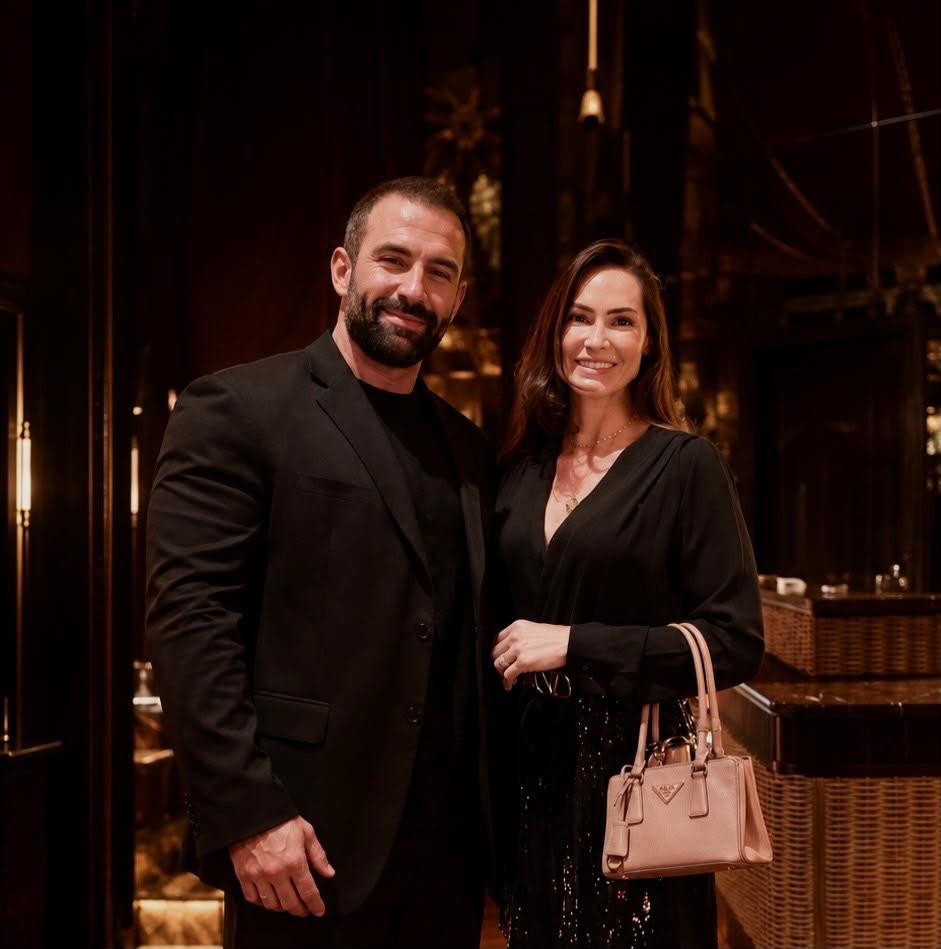
Dr. Arthur Rasqueri and Dr. Maísa Ribeiro are part of a generation of Brazilian professionals connected to the world’s leading international centers of healthcare innovation — and to Dubai, which is investing billions to become the world’s largest longevity hub.
Medicine is undergoing one of its most significant transformations in decades. The traditional model, historically focused on diagnosing and treating established diseases, is beginning to make room for a broader approach: understanding the biological mechanisms associated with aging, functional decline, and tissue recovery in order to develop increasingly individualized interventions.
This transformation has an address. Dubai is investing billions to become the world’s leading international hub for longevity — a state-backed goal with a defined timeline, dedicated funding, and its own regulatory framework. It was there that peptide-based therapeutics moved out of a regulatory gray area: the United Arab Emirates established regulations for the clinical use of peptides, with government backing, requiring product registration, documented medical indications, and traceability of origin, batch, and expiration date. While much of the world debates whether these molecules should be used, Dubai has defined how.
It is within this landscape that two Brazilian professionals have been building careers of growing international prominence, working side by side across Brazil, Europe, and the Middle East.

Dr. Arthur Rasqueri maintains his clinical practice in Brazil, where he is recognized as a leading specialist in body recomposition, longevity, health, and performance, working with artists and professionals subject to intense physical and public demands — patients for whom function, recovery, and capacity are not abstract concepts, but essential conditions of their work. At the same time, he is expanding his international presence, establishing connections with centers and professionals involved in the development of new strategies in performance, metabolism, longevity, and regenerative medicine.

Dr. Maísa Ribeiro, a scientist and PhD in Regenerative Medicine, is based in Dubai, where she works at Novomed, one of the largest clinic networks in the United Arab Emirates, coordinating the longevity department and training physicians across the network. She conducts research with the Department of Precision Medicine at Gulf Medical University and is also a faculty member at the Geneva College of Longevity Science in Switzerland.
The two also share an academic connection: Rasqueri participates as a guest physician in the Geneva College of Longevity Science’s postgraduate program in peptide therapeutics in Geneva — an environment dedicated to the teaching and discussion of longevity science and new approaches to healthcare.
Science and Clinical Practice: The Partnership Driving the Future of Medicine

For Arthur Rasqueri, the transformation underway is conceptual before it is technological.
“Medicine is entering a phase in which it is no longer enough to ask what disease a patient has. We need to understand how they are aging, how their metabolism is functioning, what their capacity for recovery is, and which biological mechanisms can be modified. The major shift is personalization.”
Answering these questions requires more than clinical experience. It requires engagement with the scientific literature, an understanding of biological mechanisms, and access to those producing scientific knowledge — and this is where the collaboration with Maísa Ribeiro has become a structural part of his practice.
The complementarity between the two is at the core of their joint work. A researcher with a decade of laboratory experience investigating stem cells derived from adipose tissue and a physician with years of clinical practice in metabolism, body composition, and performance approach the same problem from different angles — and it is precisely there that medicine advances.
“The partnership between science and clinical practice is what produces real progress. The laboratory alone generates knowledge that does not reach the patient. The clinic alone generates experience that is not tested. When the two interact, medicine moves faster and more safely.”
For Maísa Ribeiro, the principle comes before any technology: science is the foundation of innovation and makes all the difference in this new era of modern medicine. Without evidence, what remains is simply the commercialization of novelty.
Peptides: One of the Fields Generating the Most Interest
Among the fields followed by both physicians is peptide therapeutics, an area that has gained enormous international visibility in recent years.
Peptides are short chains of amino acids that act as signaling molecules in various physiological processes. Some have been part of established medicine for decades, while others remain under scientific investigation or have different levels of regulatory approval depending on the country and indication. Current interest encompasses metabolism, body composition, recovery, cellular signaling, and processes associated with aging.

For Rasqueri, the growing interest demands precisely more medical knowledge — not less.
“There is a huge difference between innovation and experimentation. The faster a field grows, the greater the physician’s commitment must be to understanding mechanisms of action, scientific evidence, safety, pharmaceutical quality, and regulation.”
This concern led him to closely follow, in Dubai, structures involved in the development and production of peptides, bringing clinical decision-making closer to an understanding of manufacturing processes, quality control, and traceability. Few physicians take this path; most prescribe without ever seeing where the product comes from.
The regulatory framework in the UAE helps explain the interest. The Dubai Health Authority has issued specific regulations governing the management of peptide products in healthcare facilities, with government backing. Only products registered or licensed by the Emirates Drug Establishment may be prescribed and administered; peptides intended exclusively for research are prohibited for human use outside an approved clinical trial; purchasing from unlicensed suppliers is prohibited; and physicians are required to inform patients about the limits of the scientific evidence and the regulatory status of each product.
For physicians, this means predictability. For patients, traceability — including batch, expiration date, origin, and documented indication.
The Frontier of Cell-Based Therapies
Another important pillar of this international movement is regenerative medicine based on cells and their derivatives — strategies designed to modulate tissue repair, inflammation, and regeneration processes.
Depending on the technology and indication, the level of evidence can vary considerably. Cell therapies, cell-derived products, exosomes, and other intercellular signaling strategies occupy different positions on the scientific maturity spectrum.
The more modern perspective is not to present these technologies as universal solutions, but to identify which have sufficient scientific support, which remain experimental, and which patients may benefit from them within appropriately selected protocols. It is precisely at this intersection between innovation and scientific rigor that Rasqueri and Ribeiro position their work.
When Longevity Stops Meaning Simply Living Longer
The contemporary discussion is becoming less focused on extending life expectancy and increasingly interested in healthspan — the period of life lived with preserved autonomy, physical capacity, cognition, and metabolic health.
This profoundly changes the medical strategy. Genomics, body composition, cardiovascular health, metabolism, muscle strength, sleep, hormonal function, inflammatory markers, and functional capacity are increasingly being assessed in an integrated manner rather than as isolated compartments.
In this context, Arthur Rasqueri’s experience in sports medicine, body composition, and performance connects directly with the science of longevity. Preserving muscle mass, for example, is no longer considered merely an aesthetic or athletic concern: muscle strength and function are playing an increasingly important role in discussions about healthy aging and maintaining functional independence throughout life.
What he has observed for years in athletes and artists is, in essence, what the longevity literature now recommends for everyone.
Dubai and the New Geography of Medicine
For decades, the United States and several European countries concentrated much of the world’s medical innovation. That map, however, is changing.
In June 2026, Sheikh Mohammed bin Rashid Al Maktoum, Vice President and Prime Minister of the United Arab Emirates and Ruler of Dubai, enacted the law establishing the Dubai Longevity Authority (DLA) — a government body created with an explicit objective: to position the emirate as the world’s leading hub for regulated longevity, wellness, and advanced medicine. The authority was placed under the leadership of Sheikh Hamdan bin Mohammed bin Rashid Al Maktoum, Crown Prince of Dubai. The authority is part of the Dubai Economic Agenda (D33) and the Dubai Social Agenda 33 — two state objectives with a 2033 horizon that involve billion-dollar investments and seek to place Dubai among the world’s top three cities for quality of life and healthy life expectancy.
The DLA’s mandate covers the entire chain: research and development, clinical trials, manufacturing, delivery, and patient care.
Regulatory speed is keeping pace with investment. On August 17, 2026, the Emirates Drug Establishment approved upadacitinib (RINVOQ) for the treatment of non-segmental vitiligo in adults and adolescents aged 12 and older, making the UAE the first country in the world to license a systemic oral treatment for this patient group. Months earlier, the same authority had registered the first oral GLP-1 agonist for chronic obesity available outside the United States.
This combination of investment, regulation, and speed of adoption has created particularly fertile ground for regenerative medicine, cell therapies, personalized medicine, genomic assessment, individualized intravenous therapies, and longevity science. More than simply learning about new technologies, the goal of the two professionals is to understand how different tools can be integrated into medical practice rationally, individually, and according to clinical criteria.
The Brazilian Patient and the Rise of International Medical Tourism
Another phenomenon is developing in parallel: the growth of high-complexity medical tourism. Patients are no longer traveling solely to undergo surgery. A new profile is seeking international centers for advanced assessments, medical second opinions, longevity programs, diagnostic technologies, and specific treatments available within local regulations.
Dubai occupies a strategic position in this market — its location between Europe and Asia, hospital infrastructure, air connectivity, and continued investment in medical technologies all contribute to its appeal.
The bridge being built between Rasqueri’s practice in Brazil and Ribeiro’s work in the UAE has two stated priorities. The first is access: ensuring that patients can receive the latest technologies at specialized centers within the local regulatory framework. The second is the experience: a planned journey with medical continuity before, during, and after treatment — appropriate assessment before travel, a clear understanding of the indication for each procedure, and subsequent follow-up.
This addresses the main problem with conventional medical tourism: fragmented care. A patient who travels alone returns alone, without someone to interpret what was done.
A Bridge Between Brazil, Europe, and the Middle East
Perhaps the most relevant aspect of their trajectories is precisely their ability to connect different ecosystems.
Brazil has a recognized clinical medical system and highly qualified professionals. Europe maintains a strong academic and scientific tradition. Dubai, meanwhile, has become an environment characterized by speed, investment, and regulated adoption of new technologies. Moving between these environments makes it possible to observe different models and select what genuinely adds value to medical practice.
For Maísa Ribeiro, living and working in the UAE means applying science directly to clinical practice — using technological advances and available therapeutic benefits to transform the lives of real patients through protocols, measurement, and follow-up.
Arthur Rasqueri is following a similar path by expanding his work beyond his Brazilian practice and pursuing education, collaboration, and knowledge development across different countries.
The goal is not simply to import treatments. It is to import knowledge, create scientific connections, and build bridges so that Brazilian physicians and patients can participate in an increasingly globalized medical landscape.
Innovation Requires Responsibility
The enthusiasm surrounding new technologies also brings a proportional responsibility.
Regenerative medicine, cell therapies, exosomes, and various peptides range from established technologies to approaches that remain experimental. Therefore, any serious discussion about the future of medicine must acknowledge the current limits of scientific evidence.
Rasqueri and Ribeiro believe that genuine innovation must go hand in hand with evidence, ethics, pharmaceutical quality, regulation, and medical supervision.
The future will not be built simply by those who gain access to new technologies first, but by those who can distinguish what is merely new from what genuinely changes clinical outcomes.
A Brazilian Generation Looking Toward the Next Era of Medicine
The presence of Brazilians in international environments of research, education, and innovation demonstrates that the country can also actively participate in this transformation — not as a spectator, but as a producer of knowledge.
Arthur Rasqueri and Maísa Ribeiro are part of this generation: trained in Brazil, with a vision of medicine that no longer recognizes geographic borders when it comes to knowledge.
From Geneva to Dubai and from the Middle East to Brazil, their trajectories converge at the same point: understanding today the medicine that will become part of tomorrow’s clinical practice.
And the principle that supports this approach is simple to state, yet demanding to fulfill. No technology should enter clinical practice before answering three questions: What is the mechanism? What is the evidence? And which patient stands to benefit?


