Dr. Mariana Ribeiro: Biosubcision and the New Logic of Global Aesthetics

'BEAUTY' COVER EDITION - APRIL 2026 ISSUE

There is a quiet moment when an industry stops evolving and begins to reorganize itself. Aesthetics is moving through exactly that point—not because of trends, but due to the exhaustion of its current model.
It is within this shift that the name Mariana Ribeiro gains relevance.
Not by repeating what already works, but by constructing a logic of her own—a way of thinking about the body that abandons fragmentation. Volume, texture, and support are no longer treated as isolated parts; they begin to respond as a system.
Biosubcision emerges from this turning point.
More than a procedure, it proposes a structural perspective. It works on reorganizing tissue layers, redistributing tension, and reshaping how the clinical eye interprets the whole. The result is no longer the sum of interventions, but the consequence of an integrated logic.
When perception changes, the outcome is no longer adjustment—it becomes coherence.
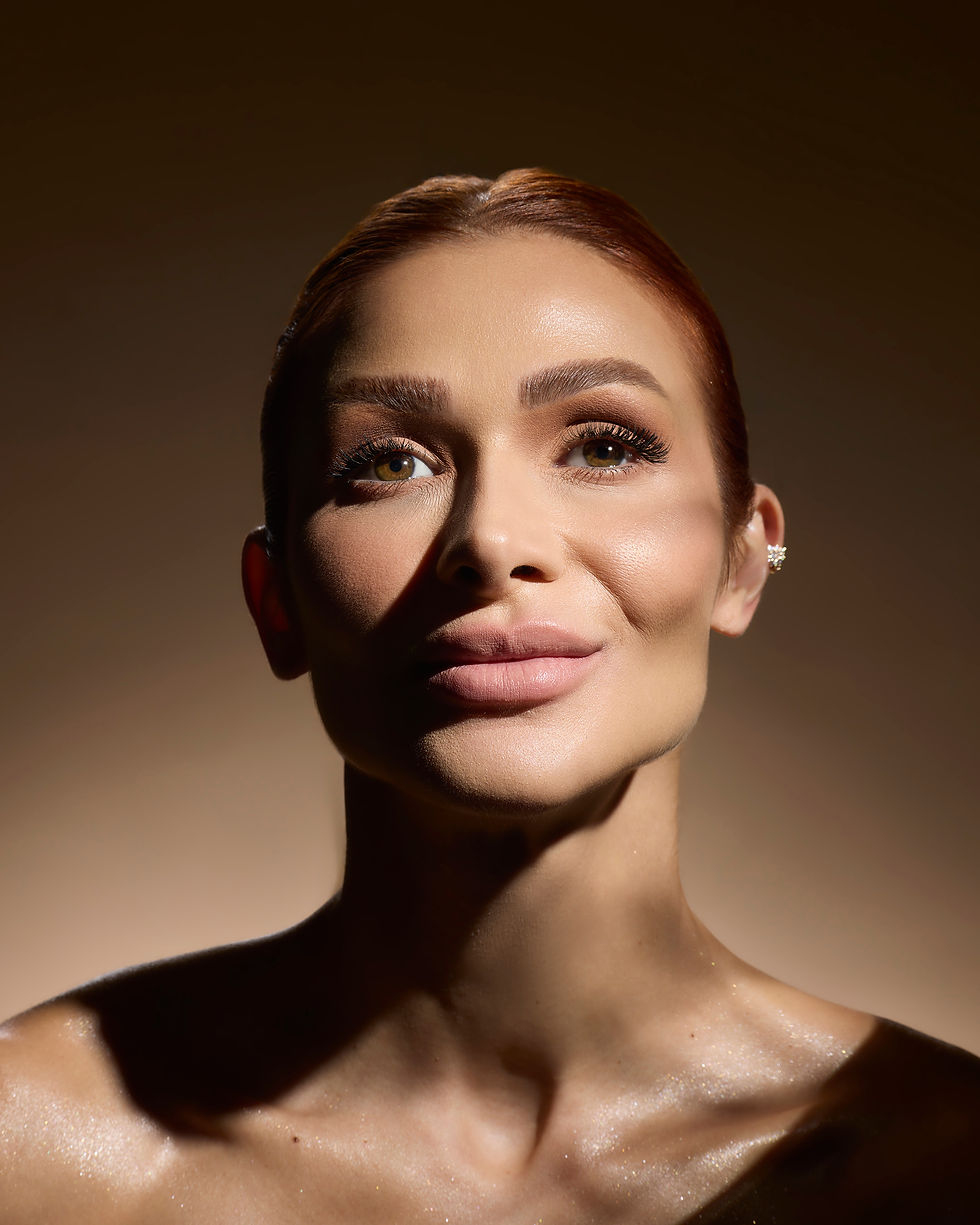
During the Aesthetic & Anti-Aging Medicine World Congress in Monaco, this approach was recognized among the most relevant in the world—a clear sign of a shift in direction. Brazil moves from simply following to influencing the course of global aesthetics.
Still, the central point is not the recognition.
It lies in the decision to transform practice into method.
By structuring education, training physicians, and organizing a replicable model, Mariana shifts her work into a rare territory: authorship with scale, without dilution. A field in which medicine ceases to be mere execution and begins to operate as architecture.
It is at this point that her trajectory is redefined.
What is at stake is not only aesthetic outcome. It is applied perception.
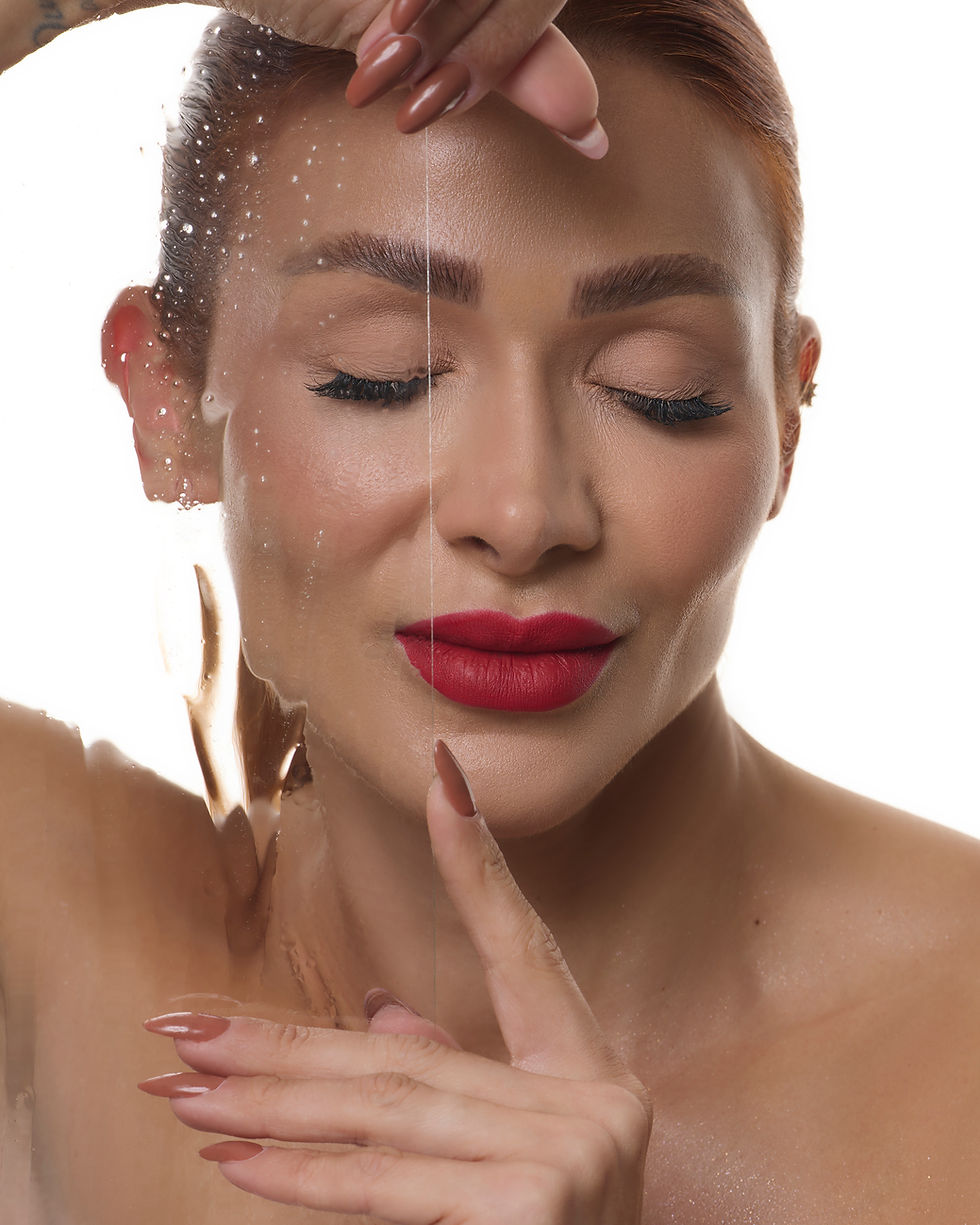
There is a precise line between altering appearance and reorganizing identity. When that line is crossed with method, the impact no longer remains confined to the mirror. It reveals itself in the way a woman carries her presence, occupies spaces, and leads her decisions.
The body ceases to be surface.
It becomes language.
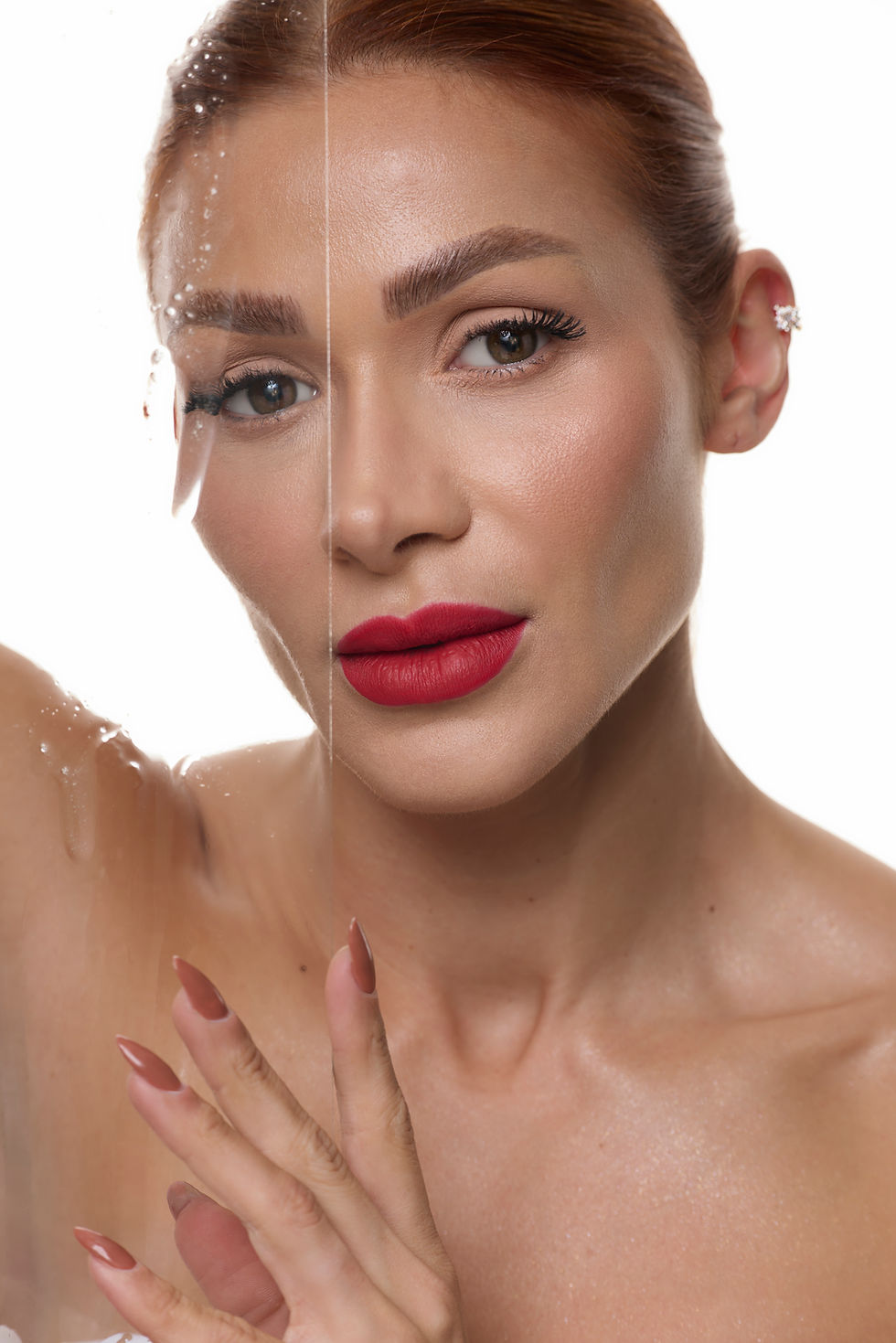
After years operating in excess, the direction of aesthetics is shifting. More technical. More restrained. And precisely because of that, more profound.
Less intervention as a gesture.
More intention as a criterion.
It is not about introducing a technique.
It is about establishing a new standard of perception.
And when the standard changes, it’s not only the result that evolves.
It is the way aesthetics itself comes to be understood.
And from that point on, nothing remains the same.

Next, the thinking behind this construction.
Her journey begins in an intimate place, shaped by memory, loss, and purpose. At what moment did medicine stop being an inherited dream and become, in fact, your own choice?
I believe this dream was never merely inherited from my story. It was, in fact, placed by God. Even before I understood what medicine was, there was already a sense of direction. My grandfather was the one who prophesied that I would become a doctor, and from my earliest childhood, this calling emerged within me very clearly.
I never considered any other path. I never shared this dream with any alternative. There was never any doubt.
But over time, I came to understand that it wasn’t just about following a destiny—it was about responding to a purpose.
Medicine stopped being something I simply carried since childhood and truly became my own choice when I recognized that this gift was not about me. It was about what God intended to do through me.
That was the moment it ceased to be inheritance and became surrender.
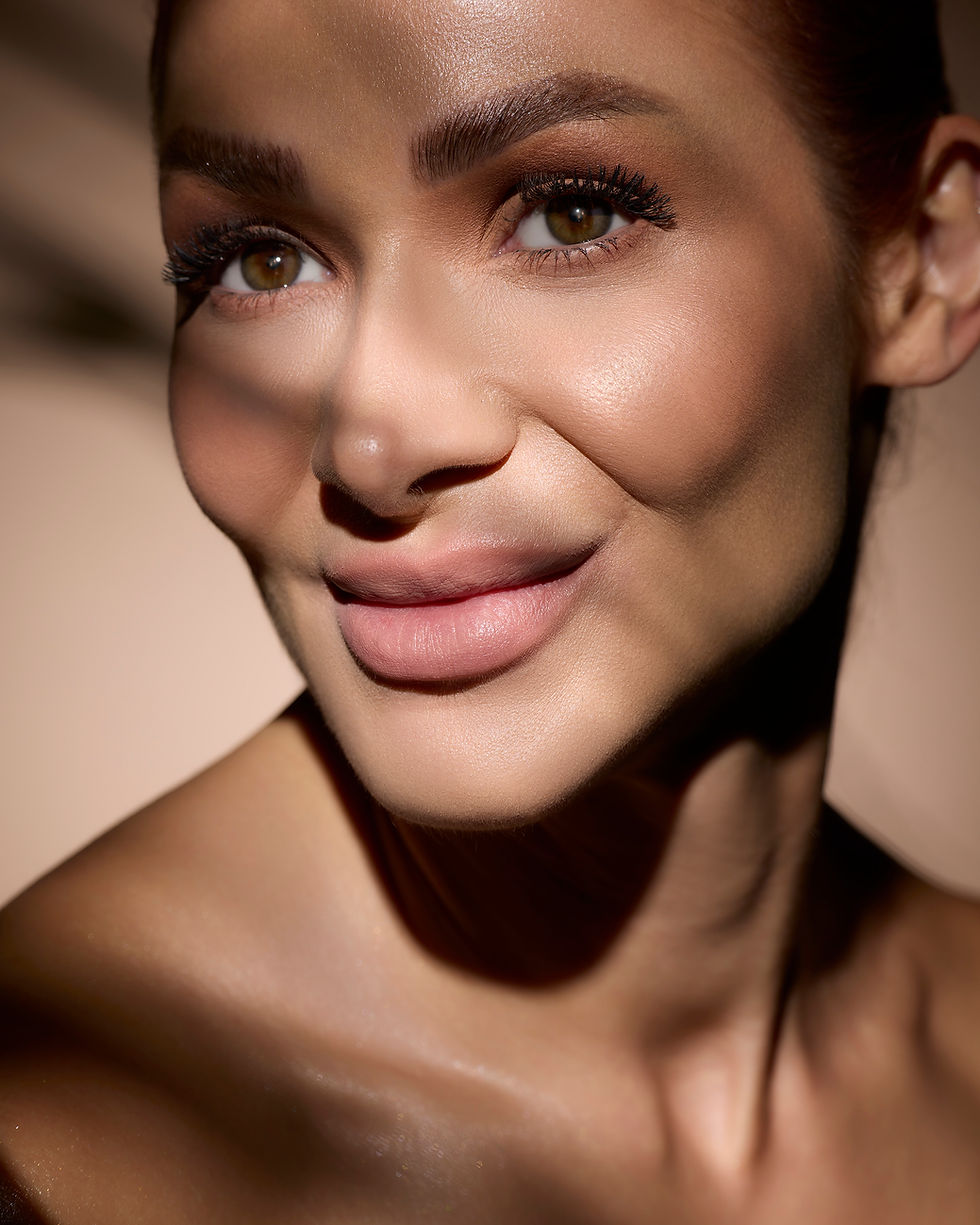
Throughout your practice, you have realized that aesthetics impacts not only appearance, but also how a woman positions herself in the world. To what extent is transforming the body, in fact, reconstructing identity?
If aesthetics were not part of a woman’s identity, it would not have such a strong impact on self-esteem.
And in practice, this becomes very clear. Because self-esteem is not something superficial—it determines how a woman sees herself and, from that, how she positions herself in the world.
Fragile self-esteem limits. It diminishes presence, voice, and choices. Strengthened self-esteem, on the other hand, expands, repositions, and authorizes a woman to live more fully.
And self-esteem and identity are directly connected.
So when I treat the body, I know I am not dealing only with form or aesthetics. I am touching something much deeper: the way this woman recognizes herself.
Transforming the body, in this context, is not about creating a new identity. It is about removing what distorts it and allowing her to reconnect with who she has always been.
That is why the impact is so significant. Because it does not end in the mirror—it manifests in the way she lives.

You developed your own approach, recognized internationally. What does it contain that goes beyond technique—what the common eye does not perceive, but ultimately defines the result?
What sets my approach apart is not just the technique itself, but the way it was conceived.
Most gluteal treatments still operate in isolation. They either focus on volume, address cellulite in a localized way, or attempt to improve skin laxity separately.
But the body does not function in parts.
Biosubcision arises precisely from breaking this logic. It is an integrated treatment that does not ignore any concern.
Through global subcision, I am not simply treating isolated points—I am altering the anatomy.
This global release of fibrotic septa reshapes the entire tissue structure. And that changes everything.
Because, contrary to what many believe, the result does not depend solely on the product used. In fact, it depends far more on the technique.
Even when using absorbable products, the structural change promoted by subcision ensures that the gluteal area will never return to what it was before.
That is why it is a fully operator-dependent procedure.
It is not about the product. It is about knowledge. It is about science. It is about method.
And above all, it is about a trained eye capable of identifying every concern and addressing them together.
It is this integration between vision and execution that ultimately defines the result.

Your trajectory begins to move beyond clinical practice, with the training of physicians and the licensing of your technique. At what point did you realize you were building something bigger than medicine itself?
Gluteal harmonization has always been a highly marginalized field, with limited scientific grounding and many inconsistent results. This created a clear frustration: patients investing significant amounts for results that were often subtle and short-lived.
Biosubcision emerges precisely from this dissatisfaction—not as just another technique, but as a response to elevate the standard.
The turning point came when I understood that this could not remain limited to my own hands.
From that moment on, training physicians and licensing the method became essential—not only to teach the procedure, but to introduce a new way of seeing and treating the patient.
And when this vision gains scientific validation, everything changes.
Being recognized as one of the best non-surgical body procedures in the world at the Aesthetic & Anti-Aging Medicine World Congress is not just a personal achievement.
It represents the repositioning of gluteal harmonization at the center of aesthetic medicine.
At that point, it stopped being about me. It became about transforming an entire market—and leaving a legacy.

In a context where aesthetics is still often reduced to superficiality, your work moves in the opposite direction. What do you believe people still haven’t understood about the true impact of beauty?
That beauty has never been about appearance.
Beauty is about alignment.
When a woman is misaligned with who she is, it shows. And when she realigns, that shows as well.
The problem is that people still confuse aesthetics with excess, with artificiality, with empty vanity.
But true aesthetics—the kind I believe in and practice—is quiet.
It doesn’t shout. It doesn’t draw attention because of change. It draws attention because of harmony.
And the greatest impact is not in what others see. It lies in what a woman begins to feel about herself.

If you could amplify your voice beyond medicine and reach the world without filters, what message still needs to be said out loud?
That purpose is not only earthly. It is eternal.
Yes, God calls us to live out a purpose here on Earth—to build, to serve, to impact lives.
But none of that can take the place of what is primary: salvation.
Because you can achieve everything, grow, prosper, be recognized, and still remain distant from what truly matters.
I came to understand that the greatest purpose is not what I do here. It is where I am going.
And living aligned with God is not only about fulfilling a professional calling. It is about living a life that points toward eternity.
If I could say something to the world, it would be this:
Do not trade the eternal for the temporary.
Build, achieve, move forward—but do not lose your soul along the way.
Because in the end, it will not be about what you accomplished here, but about having lived in alignment with the One who called you.
And it is in that place that everything gains meaning.
(This text reflects solely the interviewee’s opinion, and the publication serves only as a channel of communication without taking a position or religious stance.)
Buy now your magazine printed edition, shipped globally. Clicking below: