Structure as Method: How Dr. Lucas Luquetti Is Redefining Medical Aesthetics

'BRASIL' EDITION COVER - FEBRUARY 2026 ISSUE

For decades, medical aesthetics has been conducted as a showcase for quick solutions. Technologies emerge, new compounds are launched, promises are amplified. Immediate results have become the metric of success. Rarely sustainability.
It was in this environment that Dr. Lucas Alves Luquetti identified a silent fracture in the model. Trained in Medicine at the Municipal University of São Caetano do Sul and specialized in Nutrology and Longevity at Hospital Israelita Albert Einstein in São Paulo, Lucas built his practice between two territories that rarely engage in deep dialogue: procedure and metabolism.

He mastered technique. He understood systemic physiology. Even so, something did not add up. The discomfort was not in the technical act. It was in what came after. Impressive short-term results, fragile in the long term. Correct interventions embedded within incomplete frameworks.
The question that redirected his trajectory was not which procedure delivers the greatest impact, but which foundation governs bodily transformation. The change seemed subtle. It was not. While the market fragmented the body into isolated complaints, he began to see it as an adaptive system. Metabolism, chronic low-grade inflammation, muscle composition, tissue quality, and nutritional strategy ceased to be accessories.
They became premises.
This understanding did not arise solely from private practice. During the COVID-19 pandemic, working within Brazil’s Unified Health System, Lucas experienced a setting in which physiology was not an aesthetic variable, but a clinical determinant. Inflammation, metabolism, and organic response ceased to be academic concepts and became pillars of survival. There, the fragmentation of aesthetics became even more evident. The problem was never the technology. It was the absence of biological coherence. While the sector operated by trend, he began to operate by foundation. This transition was not a repositioning. It was an intellectual reorganization.

At the helm of Clínica Nova Anália Estética Avançada, in São Paulo, he structured a clinical model based on objective criteria, strategic sequencing, and decisions guided by physiology rather than trends. Thus emerged the embryo of what would later consolidate as the Michelangelo Protocol. The name is not conceptual ornamentation. Michelangelo did not add matter to marble; he revealed the form contained within the structure. The protocol follows the same principle. It is not about artificially creating, but biologically reorganizing.
The Michelangelo Protocol does not rely on a specific device or a market trend. It is grounded in a clear premise: sustainable aesthetic results require metabolic coherence. Without inflammatory regulation, there are only palliative measures. Without structural proportion, there is instability. Without systemic reasoning, there is fragility. The distinction is not in the final image. It lies in the invisible architecture that sustains it.

By transforming clinical reasoning into a teachable and replicable method, Lucas extends his work beyond individual practice. As a professor, speaker, and mentor to physicians, he structures a model whose scalability arises from conceptual clarity rather than mechanical repetition. Replicability requires logic. Scale requires foundation. Sustainability requires biology.
In a market driven by spectacle, he chose science.
In an environment guided by trends, he chose physiology.
In a sector that sells rapid transformation, he built permanence.
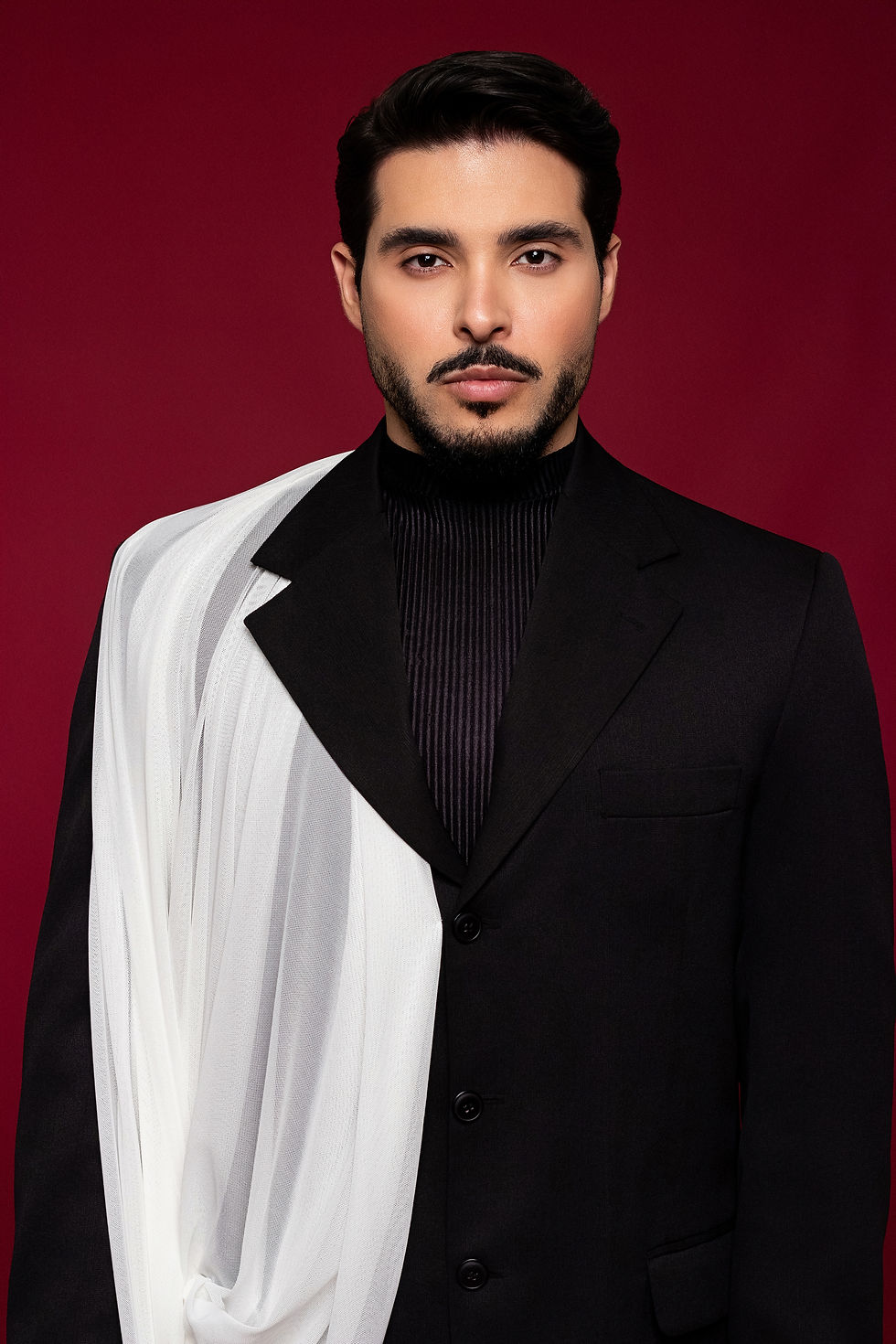
Today, the Michelangelo Protocol does not present itself as just another technique. It proposes a reorganization of the very logic of medical aesthetics.
It is not about sculpting bodies. It is about respecting tissues, modulating processes, and sustaining health. In the end, his thesis remains simple and radical: Aesthetics is only legitimate when it is born from biology. And when foundation becomes method, trend becomes irrelevant.
Ultimately, his thesis remains simple and profoundly disruptive:
Aesthetics is only legitimate when it is born from biology.
And perhaps it is precisely this premise that is redefining the future of the field.

But how does this logic translate into clinical practice, decision-making, and results that are sustained over time?
Below, Dr. Lucas Luquetti details the foundations, strategic choices, and vision that underpin the Michelangelo Protocol.
1. Your trajectory brings together surgical practice, nutrology, clinical leadership, and the training of new professionals. At what moment did you realize you didn’t want to merely perform procedures, but to redefine the very structural logic of medical aesthetics in Brazil?
There was a very clear moment in my journey. I already had technical skill, clinical results, and professional recognition. But I began to notice that many outcomes were strong in the short term and fragile in the long term. That deeply unsettled me.
I realized the issue was not the procedure itself, but the mental model of medical aesthetics. Aesthetics was being conducted as the isolated execution of techniques, rather than as structured medicine. I did not want to be merely an operator of industrial protocols. I wanted to redefine the logic behind them. That was when the transition began—from executor to model builder.

2. Over the course of your career, you built an ecosystem that integrates clinical practice, teaching, and the development of your own proprietary assets. What came first: the desire to create something truly original, or dissatisfaction with the traditional models dominating the market?
The dissatisfaction came first. I saw an extremely reactive market: a product would launch and everyone would rush to use it; a new technology would emerge and instantly become a trend; rapid results were promised and volume was sold. But there was no foundation.
There was no metabolism, no physiology, no systemic vision. From that dissatisfaction, the desire to build something original was born. I did not want to follow trends. I wanted to create a structure in which every decision carried metabolic, inflammatory, and biomechanical grounding. The originality was born out of responsibility.

3. Aesthetics has established itself as a field strongly guided by trends, technologies, and promises of immediate results. Where was the structural error in this approach, and why did the market neglect metabolism, inflammation, and physiology as central foundations of aesthetic practice for so long?
The error lay in superficiality. For a long time, aesthetics was conducted as volume correction, reduction of localized fat, and treatment of skin laxity—but rarely as systemic regulation.
Metabolism was ignored. Chronic low-grade inflammation was ignored. Body composition as a functional organ was ignored. Muscle as a pillar of longevity was ignored. The market neglected physiology because physiology is not “Instagrammable.” But it is physiology that sustains results.
A procedure without metabolic grounding is an intervention without biological support. And to me, that was always unacceptable.

4. The Michelangelo Protocol was born as a response to the fragmentation of body treatments. Developing a structured and replicable method requires years of clinical validation, technical refinement, and scientific coherence. What was the turning point that transformed a conceptual concern into a solid clinical model?
The turning point came when I stopped asking, “Which technique works best?” and started asking, “Which structural logic governs the body’s outcome?”
It was when I integrated body structure, volume and proportion, systemic inflammation, tissue quality, muscle composition, and nutritional and metabolic strategy—organizing all of this into a method. Not as a set of procedures, but as a clinical system with order, criteria, and strategic sequencing. Once the structure became clear, the model ceased to be a conceptual concern and became applied science.

5. Many speak of innovation, but few build something capable of sustaining relevance in the long term. When you say that the Michelangelo Protocol represents a new era in medical aesthetics, what effectively differentiates it from what already existed, and what makes it clinically replicable and strategically scalable in practice?
The Michelangelo Protocol is structured, not circumstantial. It does not rely on a single product or technology. It is grounded in physiology, not trends, which makes it timeless. And it is teachable because it follows logic, protocol, criteria, and a clinical algorithm.
Replicability does not come from mechanical repetition; it comes from structural clarity. Scalability is only possible when the method is bigger than the person who created it. The Michelangelo Protocol is not a procedure; it is organized clinical reasoning. That completely changes the game.

6. If you had the attention of an entire generation of doctors, patients, and health leaders around the world right now, what non-negotiable principle about medicine, scientific truth, and human responsibility would you leave as a legacy?
Medicine cannot become a spectacle. Results without scientific truth are marketing. Procedures without responsibility are vanity. Technology without physiology is illusion.
My non-negotiable principle is that aesthetics is only legitimate when it is born from biology. We do not sculpt bodies; we respect tissues, modulate processes, and sustain health. The physician who understands this builds a legacy. The one who ignores it builds trends. And trends fade. Structure endures.
Buy your printed magazine, sent globally, by clicking on the link below: